WooCommerce Product Catalog Mode & Enquiry Form
$4.99 Free for Members
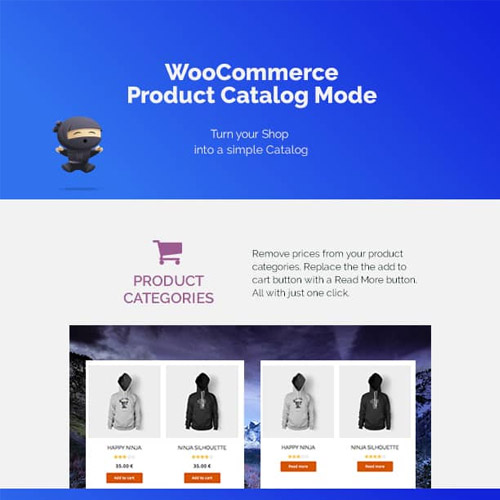
A WooCommerce plugin that turns your store into a product catalog by hiding prices and removing add-to-cart buttons, replacing them with enquiry forms.
| Version | 1.7.5 |
|---|---|
| Last Updated | January 27, 2025 |
| Type | WordPress Plugin |
| License | GPL v2 or later |
| Live Demo | View demo → |
100% GPL · Original files · Unlimited sites
- Original, unmodified files — delivered exactly as distributed by the developer
- GPL licensed — use it on unlimited websites, personal or client
- Free updates — new versions appear here as soon as they are released
- Verified downloads — every file is integrity-checked (SHA-256) before release
Distributed under the GNU General Public License. Not affiliated with the original developer; official support, license keys and developer-hosted services (such as one-click updates) are available only from the developer.
Secure checkout with PayPal · GPL licensed · Instant download
Description
WooCommerce Product Catalog Mode is a WordPress plugin for WooCommerce stores. It converts a shop into a product catalog by hiding prices and taking away add-to-cart buttons, and it puts enquiry forms in their place. Catalog mode can be applied selectively by product, category, or user role.
Key Features
- Hide Prices – Prices are hidden from the storefront so shoppers browse products without seeing costs.
- Remove Add-to-Cart – Add-to-cart buttons are removed so visitors cannot place orders directly from the catalog.
- Enquiry Forms – Enquiry forms take the place of the removed purchase controls, letting visitors send a message instead.
- Selective Catalog Mode – Catalog mode can be switched on only for chosen products, categories, or user roles rather than the whole store.
Who Is It For
This plugin suits WooCommerce store owners who want to present their products as a browsable catalog rather than a direct checkout shop. It fits businesses that prefer enquiries over instant purchases, and those who need catalog behavior limited to specific products, categories, or user roles.